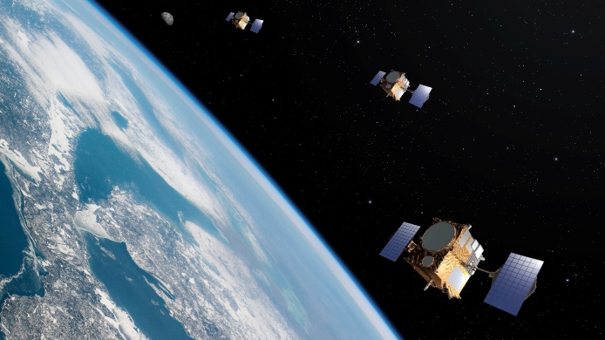
While the world’s attention remains fixed on visible military fronts, another line of confrontation is taking shape above our heads—silent, technical, yet decisive. Beijing’s decision to submit proposals to the International Telecommunication Union for mega-constellations totaling nearly 200,000 satellites is not a bureaucratic quirk. It is a show of power. Space is becoming a new strategic territory. With CTC-1 and CTC-2, China is not merely announcing a technological ambition. It is staking a claim to space. The altitudes mentioned—ranging from low Earth orbit to much higher layers—point to a strategy of massive and sustained occupation of the space domain. This is no longer merely about connecting remote areas or improving civilian services. Space is becoming a strategic domain, just like the oceans or cyberspace.
In the face of Starlink, China is not simply seeking to offer a commercial alternative. It is challenging a model. Today, SpaceX effectively imposes its technical standards, frequencies, and architectures. Tomorrow, a Chinese constellation of equivalent or even greater scale could fragment the global space ecosystem, impose an orbital economy, and spark a standards war. Those who control the constellations also control the standards, the interconnections, and thus the economic dependencies.
On one side, a private American company, closely tied to Washington’s strategic priorities; on the other, a Chinese state-led project, clear about its uses and intentions. Beijing is sending a message to the countries of the Global South: there is an alternative to Western orbital infrastructure. In a world of sanctions, pressure, and disruptions to access, having a non-aligned space network is becoming a matter of sovereignty. Even without specifying their functions, these constellations will inevitably have dual-use applications: secure communications, navigation, surveillance, and resilience in the event of conflict. The experience in Ukraine has shown just how crucial control of satellite networks is to the conduct of modern military operations. With low Earth orbits becoming saturated, China is preparing for an environment in which space will be contested, disrupted, and even militarized. Finally, there is a darker side to this. Increasing the number of satellites raises the risk of collisions, debris, and frequency saturation. The race for low Earth orbit is beginning to resemble a lawless gold rush. Behind all the talk of innovation looms a state of space disorder that could undermine the entire system and lead to orbital congestion and chaos.
Orbit is becoming the battleground of the 21st Century. By announcing these mega-constellations, China is not only challenging Starlink or Elon Musk. It is calling into question the very idea that near-Earth space can be dominated by a single actor, even a private one. What is at stake is not a satellite war, but a struggle for control over data flows, information, and sovereignty in the digital age. In this battle, orbit has already become a territory. And as always, those who arrive first intend to set the rules.
China has reportedly reached a major space sector milestone with its Kinetica-2 Y1 carrier rocket. The launch vehicle, also known as the Lijian-2 Y1, performed its inaugural flight on Monday, March 30, 2026. According to local news reports[1], its launch cost less than the price of a SpaceX Falcon 9 rocket launch. This statement is highly debatable, as it appears to be based on outdated launch cost figures. The Kinetica-2 Y1 rocket was developed by CAS Space, a commercial spin-off from the Chinese Academy of Sciences (CAS). It flew to space on March 30 from the commercial innovation pilot zone at Jiuquan Satellite Launch Centre in northwestern China. During its debut flight, the Kinetica-2 Y1 rocket delivered three payloads to Earth’s orbit, including a prototype commercial cargo spacecraft and a satellite that will function as an orbital space lab. According to a report from the South China Morning Post (SCMP)[2], CAS Space vice-president Yang Haoliang claimed the Kinetica-2 Y1 rocket launch cost 30,000 yuan per kilogram (US$4,350 per 2.2lbs). The SCMP report claims the cost of Elon Musk’s SpaceX Falcon 9 reusable rocket is typically quoted as around US$5,000 per kg. It cites Star Market Daily, a financial news subsidiary of the state-owned Shanghai Media Group. Those numbers are outdated, and they don’t reflect more recent advances that have lowered the cost of SpaceX’s pioneering workhorse rocket. As Payload Space reported last year, the launch cost for a Falcon 9, based on a max 17.5-ton capacity basis, currently stands at around US$4,000 per kg. The higher cost quoted by Star Market Daily is more reflective of previous versions of SpaceX’s workhorse rocket. In a CAS Space press statement[3] following the launch, Yang, who is also chief commander for the rocket, said the Kinetica-2 Y1 achieved a similar launch cost to Falcon 9, despite the fact that it flew in a non-reusable configuration. If true, this alone is still a remarkable achievement. Kinetica-2 Y1 flying at a similar cost to Falcon 9 when it’s not even reusable is very impressive, as SpaceX’s rocket is far and away the most successful reusable launch vehicle ever seen. The main benefit for reusable rockets, after all, is the fact that they can launch at a fraction of the cost when compared to their expendable counterparts. « With the introduction of recovery technology, costs could potentially be reduced further, possibly to around half of existing levels »”[4] CAS Space’s statement added. CAS Space noted that it is developing a proprietary reusable engine for the rocket. It is also planning a 100-kilometer recovery test for its reusable rocket system later this year.
In the United States, SpaceX is now part of the American military-industrial complex[5]. From a disruptive startup to a major contractor, SpaceX has broken the United Launch Alliance’s (a Boeing/Lockheed joint-venture) monopoly on military launches, establishing itself as the dominant space operator in the United States. SpaceX currently holds approximately $22 billion in federal contracts covering NASA, the Department of Defense (DoD), the Space Force, the National Reconnaissance Office, and the Space Development Agency, making it one of the largest non-traditional defense contractors in U.S. history. In late 2025, the US Space Force ordered another batch of about 480 Starshield-based satellites from SpaceX for a separate military communications network called MILNET. This system will provide secure, low-latency data transmission for global military operations, including drone control, naval coordination, and battlefield communications. The rapid deployment of Starshield has created a significant concentration of US military space capability in a single company. Between 2022 and 2024, about 60% of US military satellites deployed used SpaceX’s satellite manufacturing capability. This represents a dramatic shift from a dispersed contract award system to one where nearly two-thirds of deployed satellites come from one provider.
In the coming years, space may become a new battleground. The Trump administration’s most significant space policy decision on December 20, 2019, was not just the “Artemis” project, but the creation within the Department of Defense (DoD) of a sixth branch, in addition to the U.S. Army, the U.S. Navy, the U.S. Air Force, the U.S. Marine Corps, and the U.S. Coast Guard: the U.S. Space Force[6]. Until that date, U.S. space security activities had largely been the responsibility of the U.S. Air Force. But the creation of the Space Force is a decisive step, resulting from a personal decision by President Donald Trump. Its purpose was to recognize space as a domain of warfare (Warfighting Domain), on par with land, sea, and air. In the short term, the impact will be limited. But in the long term, the existence of the Space Force changes everything: it will have to protect all U.S. space activities—and those of its allies—from threats posed by adversarial satellites (de facto Chinese and Russian) near Earth (up to geostationary orbit at an altitude of 36,000 km above the equator) and beyond, in cislunar space—that is, the portion of near-Earth space extending to the Moon, where the United States intends to expand its economic and strategic activities. It is worth noting in this regard that the Trump administration’s stance is to refrain from signing new international treaties—within the UN system—on the future exploitation of extraterrestrial resources, whether on the Moon or asteroids, and instead to establish bilateral agreements. This position, which turns its back on multilateralism, could undoubtedly be challenged by a new Democratic administration. But beyond a more flexible position in principle, this will certainly change nothing in practice: the United States does not like to tie its own hands, and it would be surprising if it agreed to limit the rights of its companies to exploit the resources of space, should such resources exist.
The creation of the Space Force is largely driven by the perception of a Chinese space threat. Is this perception justified? It is true that the Chinese space program—which had kept a low profile during Deng Xiaoping’s era, up until 1981—has since taken on much greater significance, with the shift toward manned spaceflight (to which Deng Xiaoping was opposed, as he was to any prestige program) and military space activities. This trend has intensified significantly since 2013 under the leadership of Xi Jinping, who no longer hesitates to assert China’s determination to surpass the United States as the world’s leading economic and military power, and space and the conquest of the moon are clearly the areas where China ultimately aims to establish its supremacy.
Today, global powers already possess weapons capable of destroying satellites, potentially triggering a collision cascade that would turn low Earth orbit (LEO) into a debris-filled mess. The Pentagon wants to ensure its surveillance, targeting, and operational systems remain functional even in such a scenario To this end, the US military wants to exploit very low Earth orbit (VLEO) — 100 to 400 kilometers above Earth’s surface — for its needs. Any debris entering this lowest layer of orbit burns up within weeks. That makes it a self-cleaning battlefield — one the Pentagon hopes to dominate iting the 2023 Space Force’s Victus Nox tactically responsive space exercise — in which the USSF launched a spacecraft into orbit just 27 hours after receiving the order — DARPA says it wants to repeat the feat, only faster
So what are the ros and cons of very low Earth orbit ? Intense atmospheric drag, corrosive atomic oxygen, and volatile space weather make standard satellite designs ill-suited for long-term operations in VLEO. Even so, a growing number of experimental spacecraft have been testing the regime. For instance, Elon Musk’s SpaceX is pushing to deploy tens of thousands of satellites there but why? Operating at around 330 km provides higher-resolution imagery and lower signal loss, enabling direct smartphone connectivity while supporting denser frequency reuse. It also ensures defunct satellites burn up naturally, minimizing long-term debris. But there is an issue : the rapid orbital decay means operators must launch myriads of replacement satellites every year to sustain a VLEO constellation.
And China is already all-in on VLEO. On June 27, 2026 China launched the VLEO Technology Innovation and Industry Development Alliance, bringing together 34 universities, research institutes, and commercial space companies. China is already flying a steady stream of VLEO missions:
– Tianxing-1 operated at ~290 km for eight months before re-entering
– Tianxing-1 (02) remained in orbit from early 2024 until September 2025
– Shiyan-25 has maintained an orbit of ~270 km since late 2023
– Qiankun-1 has descended to ~252 km while testing hyperspectral imaging and Hall-effect propulsion
– Haishao-1, an 80-kg SAR satellite, joined the effort in December 2024
The Pentagon is far from alone in betting on VLEO. While several NATO allies are exploring the concept, China appears to have built the most sustained experimental base to date and is ready to move to systematic programs. China’s building the machine to win, and the US isn’t seriously contesting this specific niche. VLEO (roughly below 300–450 km) is a distinct sub-race from the broader LEO constellation war (Starlink vs. everyone). China is ahead operationally. Its Shiyan-25 satellite has held a stable orbit at ~270 km since September 2023, over two years of sustained low-altitude flight, which is the hard part given atmospheric drag. In June 2026 Beijing formalized a national VLEO Technology Innovation and Industry Development Alliance, co-founded by 34 organizations including universities, research institutes and commercial space companies. That’s not a demo, that’s an industrial policy move: propulsion startups, academia, and state actors being wired together deliberately rather than experimenting in isolation.
The US isn’t really racing here.DARPA has explored VLEO concepts, but there’s no equivalent coordinated US industrial alliance — American effort in low orbit is overwhelmingly concentrated in standard LEO (Starlink’s shell), not the sub-300km drag-heavy band China is targeting. Japan’s Tsubame mission actually went lower than China currently sustains, and European firms have studied air-breathing propulsion, so China isn’t even the only player, just the most institutionally organized one right now. Winning is premature. VLEO has no proven military or commercial payoff yet — it’s a bet on future imaging/comms advantages, not an operational capability gap like ICBMs were in the 1960s space race framing some outlets use. What’s true is narrower and more defensible: China has demonstrated longer, has built the alliance structure, and the US has no comparable coordinated push in this specific altitude band. That’s a lead in preparation, not yet in outcome.
Institutionally, China’s 2024 dissolution of the PLA Strategic Support Force (PLASSF)[7] and establishment of separate Aerospace, Cyberspace, Joint Logistic and Information Support Forces should be understood as a significant adaptation. The PLASSF integrated multiple information-related capabilities. The new structure allows for greater organizational specialization while preserving its connection to China’s broader concept of systems confrontation. This aligns with China’s military doctrine, which places space within a broader framework of integrated joint operations rather than treating it as an isolated platform or service. The PLA Aerospace Force is designed to consolidate China’s space and counter-space capabilities under a unified command structure with direct reporting to the Central Military Commission (CMC). This enhances central control, reduces bureaucratic friction, and enables more rapid decision-making in crisis scenarios. It also allows for clearer delineation of roles among the other newly established forces, including the Cyberspace Force and the Information Support Force, each of which addresses distinct but interrelated aspects of information warfare. Doctrinally, the establishment of the Aerospace Force reflects a maturation of China’s approach to space power.
Chinese military thought argues that understanding of the military balance is fundamentally shaped by « systems warfare concepts, »[8] according to which modern warfare is a confrontation between opposing operational systems. This view is tied to an era of informatization and intelligentization in which battlefield dominance increasingly depends on information acquisition, transmission, and exploitation. To degrade an adversary’s system of systems, one must be able to see, track, disrupt, and, if necessary, disable the space-based elements that hold that system together. The end goal of such a space strategy is not the satellites themselves but what strategic effects they offer, in terms of the kind of war China aims to fight. Therefore, China’s conception of space superiority is deeply interconnected with its ability to develop space logistics, economic power, an adaptable military, and a strategic understanding that space capabilities such as maneuver and refueling are essential to the development of a mature military doctrine. Ultimately, the future of space power will depend on combining information superiority with sustained maneuver grounded in a sound political understanding of why achieving space superiority matters. China’s bid for LEO dominance is currently a story of scale ambition outpacing deployment tempo. Combined, the two flagship mega-constellations ; Guowang (state-run, ~13,000 satellites planned, China SatNet/SASAC) and Qianfan (commercially structured, ~15,000 planned, Shanghai Spacecom) — target close to 28,000 satellites by the early 2030s. As of September 2026, actual deployment sits at roughly 190 Guowang satellites and ~230–240 Qianfan satellites in orbit — under 450 combined, against a licensed total near 28,000.
For comparison, Starlink alone already operates close to 9,800 active satellites. The gap is not marginal; it is an order of magnitude. Three structural constraints explain the lag, and none of them resolve quickly:
1- Launch cadence. China is targeting roughly 140 orbital launches in 2026, up sharply from 92 in 2025, but this remains well short of the cadence SpaceX sustains with Falcon 9 reuse alone.
2- Chinese reusable-rocket programs (Zhuque-3, Kinetica-2/Lihong-2, Long March 10B) are still in the flight-test and recovery-verification phase in 2026 ; none has yet achieved routine, Falcon-9-style reflight. Until first-stage reuse is operational at scale, China’s per-launch cost structure cannot match SpaceX’s, which directly caps deployment speed.
3- Technical reliability. Qianfan’s own deployment paused for months in 2025 after thruster and gyroscope failures ; a reminder that mass-producing satellite buses at Starlink’s rate is its own unsolved engineering problem, separate from launch capacity.
The strategic logic behind the effort is sound and well understood in Beijing: sovereign broadband infrastructure, reduced dependence on foreign and potentially adversarial space assets, dual-use military utility, and a platform for Belt and Road connectivity diplomacy. But logic and intent are not the same as capability. On the current trajectory, China is years, not months, away from closing the gap with Starlink, and the decisive variable is not political will but whether Chinese industry can crack reusable launch at production scale before the 2020s are out. Until then, the race is asymmetric: one competitor is scaling, the other is still building the track. But China is rapidly closing the technology and satellite gap with the United States in low Earth orbit (LEO), challenging American dominance through massive state investment and surging orbital launches.
By 2026, space rivalries are no longer a battle for prestige between powers vying for world domination, who view space achievements as the best way to demonstrate their technical—and thus military—superiority (space and missiles have been, and still are, closely linked). For a growing number of countries, the goal is to make the most of the enormous strategic and economic potential of space activities. The exploration of the solar system, using both robots and humans, remains an important tool for projecting power—and thus for geopolitical influence—for the major powers, but it is only one aspect of today’s space competitions, which are often, in terms of science and the exploration of the cosmos, “coopetitions ” (that is, both competition and cooperation) among the major space agencies (NASA for the United States, the CNSA—China National Space Administration—for China, the ESA for Europe, the CNES for France, the DLR for Germany, the CSA for Canada, JAXA for Japan, Roscosmos for Russia, etc.). To view a “space race” between the United States and China as the major space issue of the coming years is far too simplistic, even though both countries are indeed pursuing projects to send astronauts to the Moon by 2030—officially 2024 for NASA’s Artemis program, though that goal will not be met— and the Americans’ return to the Moon will instead take place around 2028, with international partners.
———————————–
[1] « Is China’s commercial rocket now cheaper than Elon Musk’s SpaceX Falcon 9? » Using the measure of cost per kilogram of payload capacity, CAS Space compares its Kinetica-2 to a US reusable rocket » Victoria Bela – Published: 10:00pm, 1 Apr 2026. https://www.scmp.com/news/china/science/article/3348697/chinas-commercial-rocket-now-cheaper-elon-musks-spacex-falcon-9
[2] « China’s rocket start-ups push the envelope as IPOs gather pace » Themis Qi – Published: 3:30pm, 23 Jan 2026. https://www.scmp.com/news/china-future-tech/aerospace/article/3340964/chinas-rocket-start-ups-push-envelope-ipos-gather-pace?module=inline&pgtype=article
[3] CAS in Media – « China’s New Commercial Rocket Kinetica-2 Completes Maiden Mission » Editor: CHEN Na | Mar 31, 2026. https://english.cas.cn/newsroom/cas-in-media/202603/t20260331_1154303.shtml
[4] Deng Xiaoci, « China’s CAS Space advances reusable rocket tech; Lihong-2 set for maiden flight this year as firm builds space-to-ground transport », Global Times, 28 juillet 2026, https://www.globalsecurity.org/space/library/news/2026/space-260728-globaltimes01.htm.
[5] From Starlink to Starshield: How Musk is building a military satellite empire – 12 August 2026. In 2021, SpaceX signed a $1.8 billion contract with the US National Reconnaissance Office (NRO), an agency responsible for operating spy satellites. Under this agreement, SpaceX is building a military counterpart to its Starlink constellation, called Starshield. The satellites use the same heavy platform as the civilian V2 Starlink models, but the equipment on board is fundamentally different: high-resolution optical telescopes, synthetic aperture radars for all-weather imaging, signals intelligence modules for intercepting communications, infrared sensors for missile warning. By August 2026, approximately 245 Starshield satellites have been deployed, with most of them launched in just the last 8 months. This means the NRO suddenly increased its fleet from dozens to over 100 satellites in less than a year. Jonathan McDowell, Jonathan’s Space Pages SpaceX Starshield launch list, data as June 21, 2026, planet4589.org/space/con/stsh/stats.html ; KeepTrack, Starshield Satellite Bus, données au 21 juillet 2026. keeptrack.space/satellites/buses/starshield.
[6] Decision to establish the Space Force: announced by Trump on June 18, 2018 (during a National Space Council meeting), formalized by Space Policy Directive-4 (SPD-4), which directs the Secretary of Defense to prepare a legislative proposal establishing the Space Force as the sixth branch of the armed forces, with the explicit wording “warfighting domain, just like the land, air, and sea .” Effective date: December 20, 2019, when Trump signed the National Defense Authorization Act for Fiscal Year 2020 (NDAA FY2020), which legally established the U.S. Space Force. The White House, Fact Sheet: President Donald J. Trump Is Establishing America’s Space Force, February 19, 2019, Space Policy Directive-4, archives.gov; see also National Defense Authorization Act for Fiscal Year 2020, Pub. L. No. 116-92, signed on December 20, 2019.
[7] « A Disturbance in the Force: The Reorganization of People’s Liberation Army Command and Elimination of China’s Strategic Support Force » Information Support Force Publication China Brief Volume 24 Issue 9 – 04.26.2024 By J. Michael Dahm https://jamestown.org/a-disturbance-in-the-force-the-reorganization-of-peoples-liberation-army-command-and-elimination-of-chinas-strategic-support-force/
[8]https://www.rand.org/content/dam/rand/pubs/research_reports/RRA1500/RRA1535-1/RAND_RRA1535-1.pdf?